Knee Ligament Injuries
To include MCL, LCL, PCL ligaments

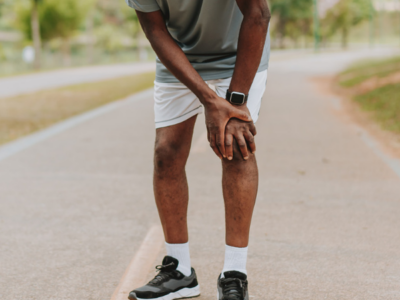
Knee ligament sprains and tears are common sports injuries, especially in athletes who participate in contact sports such as football, soccer or basketball.
These injuries often occur when a force pushes the knee sideways, either inward or outward, or when a sudden movement strains the knee ligaments.
Knee ligament injuries can range from mild sprains to complete tears, causing pain, swelling and instability. With appropriate treatment, most patients regain full range of motion and knee stability.
Schedule Now with a Knee Specialist
What Are Knee Ligaments?
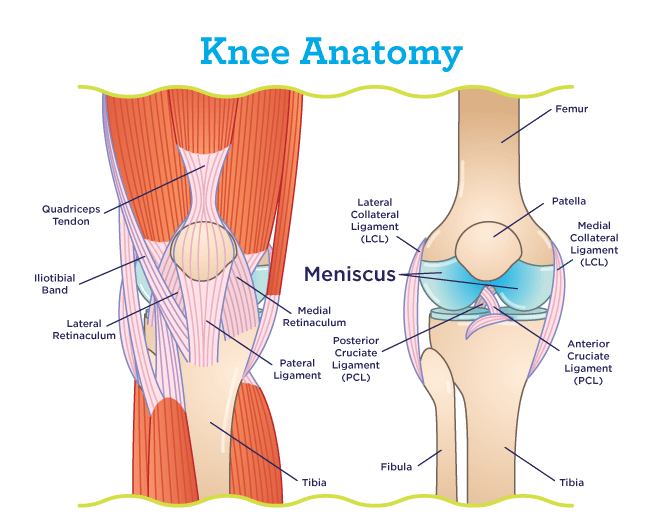
The knee is a complex joint, made from the femur, tibia and patella bones. These bones are connected by ligaments, which stabilize the joint.
There are four main ligaments in the knee: the medial collateral ligament (MCL) and lateral collateral ligament (LCL), which contribute to side-to-side stability; and the anterior cruciate ligament (ACL) and posterior cruciate ligament (PCL), which work together for front-to-back stability.
The collateral ligaments are often injured by direct blows to the knee, while cruciate ligaments are frequently injured during sudden twists or stops. The fibula is part of the bony structure of the knee along with the femur, tibia, and patella.
What are the Types of Knee Ligament Injuries?
Ligament injuries are graded by severity:
- Grade 1: Mild stretching of the ligament; knee remains stable
- Grade 2: Partial tear; ligament is loose but not fully torn
- Grade 3: Complete tear; the ligament is torn or pulled off the bone and the knee is unstable
The MCL is injured more often than the LCL or PCL. LCL injuries are less common and often involve other structures in the knee.
What are the Symptoms of a Knee Ligament Injury?
You may have a knee ligament injury if you notice:
- Pain on the inside or outside of your knee
- Swelling near the site of injury
- Feeling of instability or your knee “giving out”
Other signs may include tenderness, difficulty walking and bruising around the knee.
How is a Knee Ligament Injury Treated?
Treatment depends on the ligament involved and severity of the injury.
Nonsurgical Treatment
Most isolated collateral ligament injuries can heal without surgery. Avoid activities that may impede healing, rest the joint, ice for 15—20 minutes at a time and consider physical therapy. Bracing can also help stabilize your knee while conservative treatments and healing occur.
Surgery for Knee Ligament Injuries
Surgery may be required if:
- The ligament is completely torn and cannot heal naturally
- There are multiple ligament injuries
- The ligament is pulled off the bone
Surgical techniques vary depending on the ligament and extent of injury. Your orthopedic surgeon will recommend the best approach for your knee.
Recovery and Return to Sports after Knee Injuries
Recovery depends on the severity of the injury and treatment plan. Your team will recommend functional progression as you gradually return to sports activities, starting with light jogging before working your way up to full participation. Knee braces may be recommended during sports to prevent re-injury.
With proper care, most patients regain full function and return to their previous activity levels.
Treat Knee Ligament Injuries at OrthoNebraska
Need relief from injured knee ligaments in the Omaha area? At OrthoNebraska, we want to make sure that our patients feel understood, safe and confident to take on an appropriate treatment plan. With proper management, we can help you reduce pain levels and improve quality of life.
Knee Ligament Specialists
-
 Ryan M. Arnold, MDKnee, Sports Medicine
 -
 Steven X. Goebel, MDJoint Replacement, Knee, Shoulder, Sports Medicine
 -
 Jace J. Heiden, MDSports Medicine, Knee, Shoulder, Hip Arthroscopy
 -
 Steven G. Kumagai, MDHip, Joint Replacement, Knee
 -
 Scott B. Reynolds, MDSports Medicine, Knee, Shoulder, Elbow
 -
 Paul A. Watson, MDHip Arthroscopy, Sports Medicine, Joint Replacement