Hip Instability
Sometimes described as a loose or wobbly hip, the joint can be unstable due to underlying structures, with or without pain

Sometimes described as a loose or wobbly hip, the joint can be unstable due to underlying structures, with or without pain.
Seeing a hip specialist can help you understand what might be causing your hip to feel unstable, and work with you on a personalized treatment plan centered around your goals.
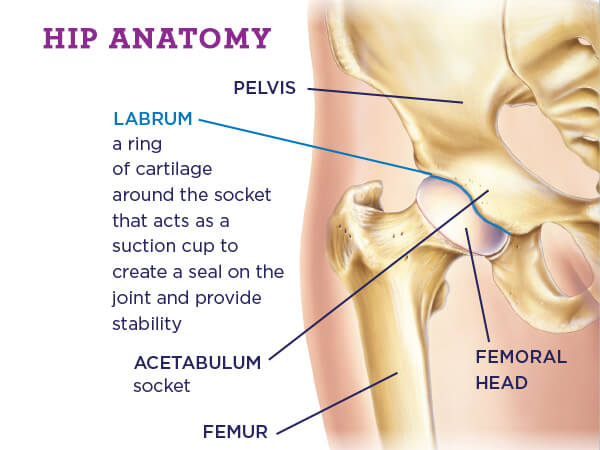
The hip joint is an essential component of the human body, providing support for weight-bearing activities such as standing, walking and running. Its stability is thus vital to sustaining these functions. When any of these structures become damaged or injured, it can lead to hip instability.
What are Symptoms of Hip Instability?
Symptoms associated with hip instability may include pain, laxity, subluxation or dislocation of the hip joint as well as sensation that the hip is “coming out” of the socket or producing a clicking sound.
Hip instability can be either traumatic, due to injuries from sports or motor vehicle accidents, or atraumatic, as a result of overuse and developmental/congenital abnormalities of the hip joint. The symptoms of hip instability are often similar to those of groin injuries, so have an expert pinpoint the source of the pain is essential.
What are the Potential Causes of Hip Instability?
Labral and ligament tears, hip dysplasia (undercoverage of the acetabular socket), femoroacetabular impingement (abnormally shaped bones of the hip joint) and tears to the ligament are all potential causes of hip instability.
Diagnosis usually requires a detailed medical history and physical examination, as well as imaging studies such as MRIs or X-rays. In some cases, specialized tests such as diagnostic hip injections may be recommended.
How is Hip Instability Treated?
Conservative treatment of hip instability typically involves activity modification, anti-flammatory medications, injections or a referral to a physical therapist for muscle strengthening and range of motion exercises. The exact treatment plan would depend on your condition and individual goals. If these methods prove unsuccessful in recovering stability, hip arthroscopy may be recommended. Surgery is often required to return to a highly functioning hip.
Your orthopedic hip specialist will be best-placed to assess your hip instability symptoms and determine which course of action is most appropriate. With timely diagnosis and treatment, hip stability can be regained, allowing you to resume normal or athletic activities with a high degree of comfort.
Treat Hip Instability at OrthoNebraska
Need relief from hip instability in the Omaha area? At OrthoNebraska, we want to make sure that our patients feel understood, safe and confident to take on an appropriate treatment plan. With proper management, we can help you reduce pain levels and improve quality of life.
Hip Instability Specialists
-
 Charles F. Burt, MDHip Preservation and Arthroscopy, Sports Medicine
 -
 Jace J. Heiden, MDSports Medicine, Knee, Shoulder, Hip Arthroscopy
 -
 Paul A. Watson, MDHip Arthroscopy, Sports Medicine, Joint Replacement