Hip Dysplasia

In people with hip dysplasia, the hip joint doesn’t fit together as securely as it should, which can cause instability from childhood into adulthood. Over time, this structural difference can lead to problems.
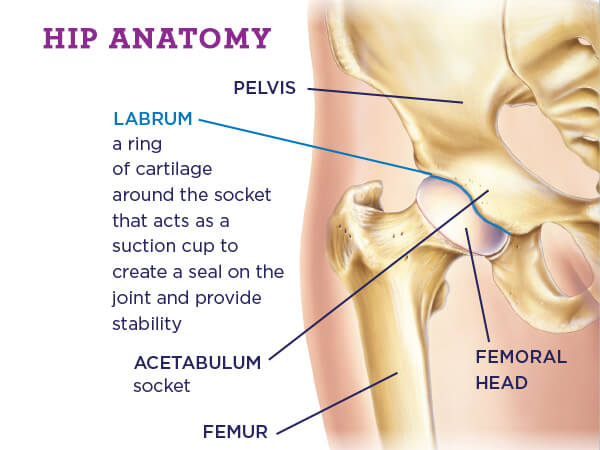
Hip dysplasia occurs when the hip socket is too shallow to fully support and cover the head of the femur. Over time, this mismatch causes excess pressure on the joint, leading to cartilage wear, pain and sometimes early arthritis. Although the condition is often genetic and present at birth, many patients don’t notice symptoms until adolescence or early adulthood, when activity, growth or misalignment finally become uncomfortable.
If diagnosed early, hip dysplasia can often be successfully managed or corrected before more serious joint damage occurs.
What is Hip Dysplasia?
Hip dysplasia is a structural abnormality where the acetabulum (hip socket) doesn’t form deep enough to stabilize the femoral head (ball). Because the ball doesn’t fit tightly into the socket, the joint becomes unstable and experiences uneven loading.
Over time, this can lead to:
- Labral tears
- Cartilage breakdown
- Bone-on-bone contact
- Early osteoarthritis
Hip dysplasia varies in severity. Some patients have a mildly loose joint, while others may have significant instability or even full dislocation.
What Causes Hip Dysplasia?
Most cases of adolescent or adult hip dysplasia begin as developmental dysplasia of the hip (DDH), a condition present at birth. Sometimes this isn’t diagnosed until later in life.
Risk factors include:
- Family history
- Being born in breech position
- Being a firstborn
- Being assigned female at birth
Even when DDH is mild or unnoticed in infancy, symptoms often appear later when activity increases or when structural changes occur during adolescence.
What are Signs and Symptoms of Hip Dysplasia?
Hip dysplasia usually becomes painful once cartilage or the labrum begins to wear down.
Common symptoms include:
- Groin pain (most typical)
- Pain on the outside of the hip
- Pain that worsens with activity or throughout the day
- Locking, catching or popping in the hip or groin
- Stiffness or reduced hip range of motion
Symptoms may start out mild and gradually increase in frequency and intensity.
How is Hip Dysplasia Treatmed?
The goal of treatment is to relieve pain and preserve your natural hip joint for as long as possible.
Nonsurgical Treatment
Best for mild cases or when joint damage is minimal:
- Observation & monitoring
- Lifestyle modification (activity changes, weight management)
- Physical therapy to stabilize the joint and improve mobility
- NSAIDs for pain and inflammation
- Corticosteroid injections (temporary relief only)
These options may reduce symptoms, but they do not correct the underlying structural issue. Ongoing monitoring is essential.
Hip Dysplasia Surgery
Surgery may be recommended if conservative treatments fail. OrthoNebraska performs hip arthroscopy, a hip-preserving surgery for patients with minor hip dysplasia and/or other anatomical, congenital, or wear and tear issues of the hip. However, patients with more severe hip dysplasia often need an open surgery called Periacetabular Osteotomy (PAO). OrthoNebraska does not perform this surgery. If this procedure is the best option for you, OrthoNebraska would refer you to an out-of-town specialist.
For older patients, severe cases with advanced arthritis may ultimately require total hip replacement.
What is the Recovery and Outlook for Hip Dysplasia Like?
Recovery depends on the severity of dysplasia and the treatment used.
- Limited or no weight-bearing for 6–12 weeks after surgery
- Physical therapy to restore mobility and strengthen hip muscles
- Follow-up imaging to ensure proper healing
- Most patients return to full activity once healing is complete
Treat Hip Dysplasia at OrthoNebraska
Need relief from hip dysplasia in the Omaha area? At OrthoNebraska, we want to make sure that our patients feel understood, safe and confident to take on an appropriate treatment plan. With proper management, we can help you reduce pain levels and improve quality of life.
Hip Dysplasia Specialists
-
 Charles F. Burt, MDHip Preservation and Arthroscopy, Sports Medicine
 -
 Jace J. Heiden, MDSports Medicine, Knee, Shoulder, Hip Arthroscopy
 -
 Michael A. Stojanovic, MDHip, Joint Replacement, Knee
 -
 Paul A. Watson, MDHip Arthroscopy, Sports Medicine, Joint Replacement