Hip Impingement (FAI)
also called Femoroacetabular Impingement (FAI)

Hip impingement is what happens when the bones of the hip rub together in a way they shouldn’t, especially during bending or twisting.
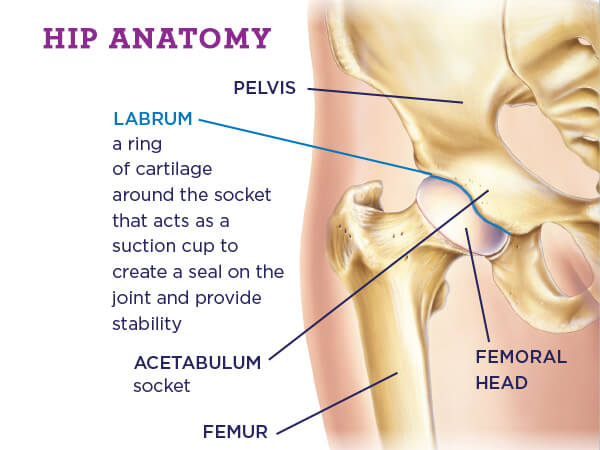
Hip impingement, also called femoroacetabular impingement (FAI), occurs when extra bone growth creates a poor fit in the hip joint, which is a ball-and-socket joint. Over time, the extra friction between the bones can damage the joint, causing pain, stiffness and limited mobility.
Hip impingement is more common in women, and while it is a genetic condition, it can affect anyone with irregular hip bone development.
Schedule Now with a Hip Specialist
What Causes Hip Impingement?
FAI occurs due to abnormal hip bone formation during childhood. Extra bone growth — either on the femoral head, the acetabulum or both — creates friction during hip movement.
Key causes include:
- Genetic factors: Hip bones may naturally form with abnormal shapes
- Bone overgrowth: Spurs can develop over time, worsening the impingement
- Activity level: Athletic people may notice symptoms earlier due to increased hip use, but exercise does not cause FAI
Because FAI is structural, there’s no way to prevent it, though early treatment can limit joint damage.
What Are the Types Types of Hip Impingement?
There are three main types of FAI:
- Pincer Impingement: Extra bone extends over the rim of the acetabulum, crushing the labrum beneath the rim.
- Cam Impingement: The femoral head is not perfectly round, creating a bump that grinds the cartilage inside the acetabulum.
- Combined Impingement: Both pincer and cam deformities are present.
What are Hip Impingement Symptoms?
Symptoms often appear gradually and may include:
- Pain in the groin (most common) or outside of the hip
- Stiffness and limited range of motion
- Sharp pain when twisting, turning or squatting
- Limping or discomfort during daily activities
Initially, the pain may be mild, but persistent symptoms indicate labral or cartilage damage and can worsen over time.
How is Hip Impingement Treated?
Nonsurgical Treatment
Early FAI may be managed without surgery:
- Activity modifications to avoid pain triggers
- Anti-inflammatory medications
- Injections
- Physical therapy
These measures can relieve symptoms temporarily, but they do not correct the structural problem.
Hip Impingement Surgery
When FAI causes persistent pain or joint damage, surgery is often recommended.
Hip arthroscopy is a minimally invasive surgery using small incisions and a camera to trim bone spurs and repair or clean damaged labrum and cartilage. In severe cases, your team may recommend open surgery.
Hip Impingement Recovery and Outlook
Many patients experience significant pain relief and improved mobility after arthroscopy. Correcting FAI early can help prevent further cartilage and labral damage.
Severe or delayed cases may have irreversible joint damage, which can require future interventions.
Ongoing advancements in surgical techniques continue to improve outcomes.
Treat Hip Impingement at OrthoNebraska
Need relief from FAI hip impingement in the Omaha area? At OrthoNebraska, we want to make sure that our patients feel understood, safe and confident to take on an appropriate treatment plan. With proper management, we can help you reduce pain levels and improve quality of life.
Hip Impingement Specialists
-
 Charles F. Burt, MDHip Preservation and Arthroscopy, Sports Medicine
 -
 Jace J. Heiden, MDSports Medicine, Knee, Shoulder, Hip Arthroscopy
 -
 Paul A. Watson, MDHip Arthroscopy, Sports Medicine, Joint Replacement