Carpal Tunnel Syndrome
Also known as Median Nerve Entrapment

Carpal tunnel syndrome is a common hand and wrist condition caused by pressure on the median nerve as it passes through a narrow passage in the wrist called the carpal tunnel.
Over time, the pressure from carpal tunnel syndrome can damage the nerve and affect your hand function. Early diagnosis and treatment are key to preventing long-term complications and restoring hand strength and sensation.
What Is Carpal Tunnel Syndrome?
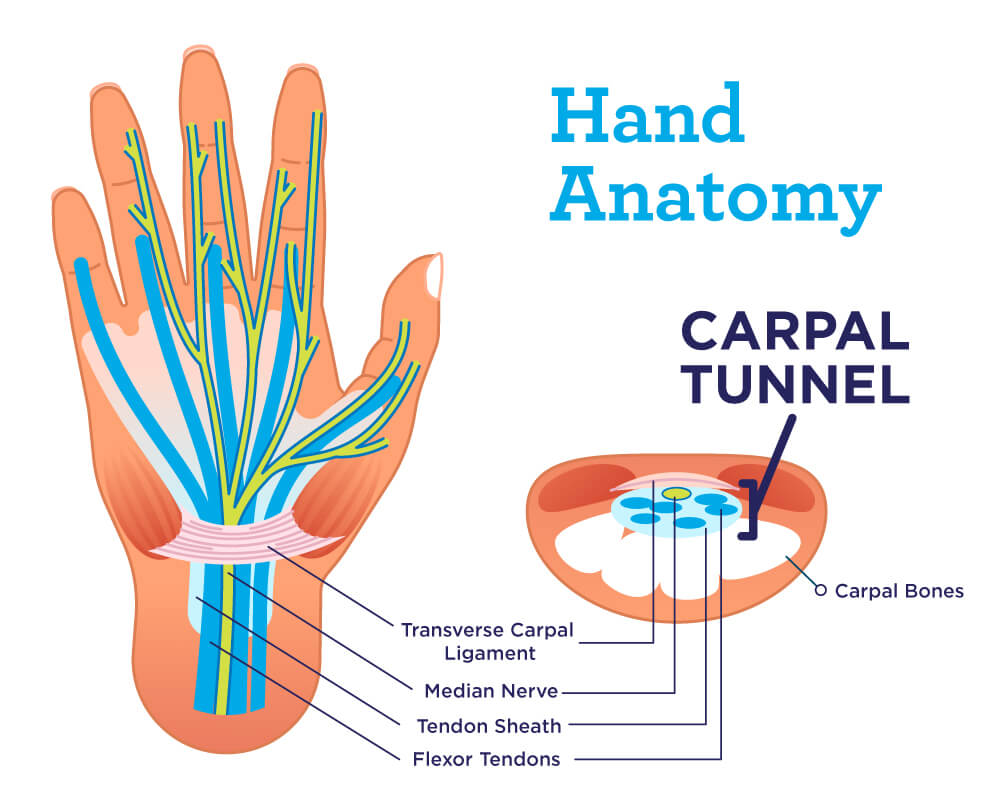
The carpal tunnel is a rigid, narrow passage in the wrist formed by wrist bones and a strong band of tissue called the transverse carpal ligament. Nine tendons that bend the fingers and thumb pass through this tunnel, including the median nerve, which provides feeling to the thumb and most of the fingers. It also controls the muscles at the base of the thumb, which are responsible for fine motor movements.
When the tunnel becomes too tight, that median nerve is compressed, leading to pain, numbness and other symptoms of carpal tunnel syndrome.
What Causes Carpal Tunnel Syndrome?
Carpal tunnel syndrome occurs when pressure on the median nerve increases due to swelling, repetitive motion or other factors. Common contributors include:
- Wrist injuries, fractures or dislocations
- Repetitive hand or wrist activities (typing, gripping, assembly work)
- Medical conditions like rheumatoid arthritis, gout, diabetes, hypothyroidism or fibromyalgia
- Pregnancy-related fluid retention and hormonal changes
- Ganglion cysts, tumors or bone spurs
- Obesity or general aging
Activities that keep your wrist bent or make a tight fist, even temporarily, can also increase pressure on the nerve and trigger symptoms.
Whare the the Symptoms of Carpal Tunnel Syndrome?
Carpal tunnel syndrome can develop gradually and may worsen over time. Symptoms typically include:
- Numbness, tingling or burning in the thumb, index, middle and ring finger
- Weakness or clumsiness, making tasks like buttoning a shirt or holding objects difficult
- Pain or tingling that travels up the forearm
- Dropping items or losing awareness of hand position
- Waking at night due to numbness or tingling in the hand
In severe cases, muscles at the base of the thumb may shrink, making gripping and pinching more difficult.
How is Carpal Tunnel Syndrome Treated?
The goal of nonsurgical therapy is to reduce pressure on the median nerve. Options may include wrist splints, especially at night; anti-inflammatory medications; activity modifications to reduce repetitive strain and cortisone injections to reduce swelling.
These methods are most effective for mild or intermittent symptoms and can help improve symptoms.
Carpal Tunnel Syndrome Surgery
If nonsurgical treatments cause recurrence of symptoms or are ineffective, carpal tunnel release surgery may be recommended. This procedure involves cutting the transverse carpal ligament to relieve pressure on the median nerve through either an open or endoscopic approach. Oftentimes, this procedure can be performed using WALANT, n innovative, fast and convenient approach to hand and wrist surgery.
Post-surgery, patients are encouraged to:
- Move fingers frequently to reduce stiffness and prevent scar tissue adhesions
- Gradually return to normal activities based on the demands of their work and lifestyle
- Perform range of motion exercises and scar massage consistently
Most patients experience relief from numbness and tingling soon after surgery, with continued improvement up to one year after surgery.
Carpal Tunnel Syndrome Treatment at OrthoNebraska
Looking for relief from carpal tunnel syndrome pain in the Omaha area? At OrthoNebraska, we want to make sure that our patients feel understood, safe and confident to take on an appropriate treatment plan. With proper management, we can help you reduce pain levels and improve quality of life.
Carpal Tunnel Syndrome Specialists
-
 Nicholas B. Bruggeman, MDHand & Wrist, Elbow, Sports Medicine
 -
 Michael J. Coffey, MDHand & Wrist, Elbow, Sports Medicine
 -
 Thomas P. Ferlic, MDElbow, Hand & Wrist
 -
 Todd J. Gaddie, MDHand & Wrist, Elbow, Sports Medicine
 -
 Alex C. Lesiak, MDHand & Wrist, Elbow, Sports Medicine
 -
 M. Andrew Thompson, MDElbow, Hand & Wrist, Shoulder, Sports Medicine