Hip Arthritis
Hip arthritis is a degenerative condition that causes pain, stiffness and limited mobility in one of your body’s major weight-bearing joints. While there is no cure, early diagnosis and proper management can significantly reduce symptoms and help you stay active and independent.
What is Hip Arthritis?
Hip arthritis (osteoarthritis) is a “wear-and-tear” condition in which the smooth cartilage that cushions the hip joint gradually breaks down. As the joint space narrows and the bones rub together, pain, swelling and stiffness develop and typically worsen over time.
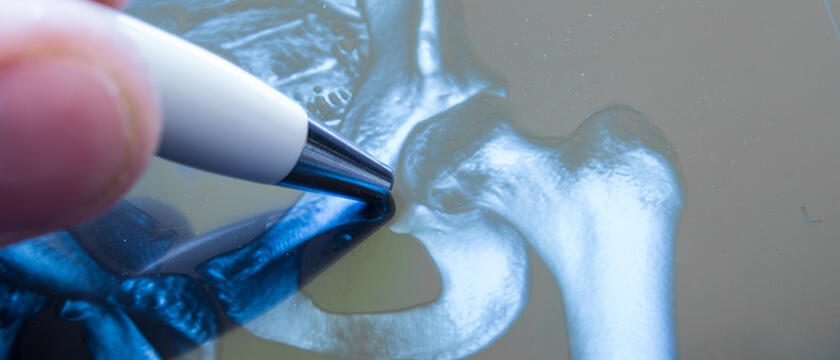
The hip is a ball-and-socket joint made up of:
- Femoral head (ball) – the top of the thighbone
- Acetabulum (socket) – part of the pelvis
- Articular cartilage – a slick, protective layer that allows smooth movement
- Synovium – the lining that produces lubricating fluid
When arthritis damages these structures, normal movement becomes difficult or painful.
What Causes Hip Arthritis?
There is usually no single cause, but several factors increase the risk:
- Age 50+
- Family history of arthritis
- Previous hip injury
- Obesity or excess joint stress
- Hip abnormalities present at birth (developmental dysplasia)
Hip arthritis can still occur even without known risk factors.
What are the Symptoms of Hip Arthritis?
Symptoms usually develop slowly and worsen over months or years. Common signs include:
- Deep groin or thigh pain (may radiate to the buttocks or knee)
- Morning stiffness, or stiffness after sitting
- Pain during activity, especially walking, standing or climbing stairs
- Grinding, catching, locking or “sticking” sensations
- Loss of hip range of motion
- A limp or difficulty with weight-bearing
- Pain that worsens with rainy or cold weather
If symptoms begin interfering with daily activities, like tying your shoes or rising from a chair, it may be time to seek treatment.
How is Hip Arthritis Treated?
Although hip arthritis cannot be reversed, many people achieve excellent symptom relief with a combination of nonsurgical treatments. Your team at OrthoNebraska will help you choose the approach that best meets your needs and activity goals.
Nonsurgical Treatment for Hip Arthritis
- Avoiding activities that worsen pain (stair-climbing, running)
- Switching to low-impact exercise (swimming, cycling)
- Losing weight to reduce joint stress
- Physical therapy
- Assistive devices like a cane, walker or long-handled reacher
- Medications like acetaminophen, NSAIDs or corticosteroids
- Corticosteroid or viscosupplementation injections
Hip Arthritis Surgery
Surgery may be considered when pain becomes disabling or no longer responds to nonsurgical treatment.
Surgical options include:
- Total Hip Replacement: Damaged portions of the ball and socket are replaced with durable artificial components to restore smooth, pain-free movement.
- Hip Resurfacing: The socket is replaced with a metal shell while the femoral head is reshaped and capped with metal (suitable for select patients).
- Osteotomy: Bone is realigned to reduce pressure on the joint (used infrequently).
Your surgeon will explain the benefits, risks and expected recovery for each option so you can make an informed decision.
Hip Arthritis Recovery and Outlook
Recovery depends on the procedure performed. After surgery:
- Physical therapy helps restore strength and range of motion.
- Walking aids may be needed temporarily.
- Most patients experience significant pain relief and improved function.
OrthoNebraska works with you to build a treatment approach that fits your lifestyle and goals, no matter your approach to treatment.
Treat Hip Arthritis at OrthoNebraska
Need relief from hip arthritis in the Omaha area? At OrthoNebraska, we want to make sure that our patients feel understood, safe and confident to take on an appropriate treatment plan. With proper management, we can help you reduce pain levels and improve quality of life.
Hip Arthritis Specialists
-
 Neil W. Antonson, MDHip and Knee Replacement
 -
 Mark E. Goebel, MDHip, Joint Replacement, Knee, Shoulder, Sports Medicine
 -
 Craig L. Hansen, MDHip, Joint Replacement, Knee
 -
 Ajoy K. Jana, MDHip, Joint Replacement, Knee
 -
 Sayfe A. Jassim, MDHip, Joint Replacement, Knee
 -
 Steven G. Kumagai, MDHip, Joint Replacement, Knee
 -
 Michael A. Stojanovic, MDHip, Joint Replacement, Knee
 -
 Joshua A. Urban, MDHip, Joint Replacement, Knee
 -
 Paul A. Watson, MDHip Arthroscopy, Sports Medicine, Joint Replacement