Meniscus Tears
Meniscus tears are among the most common knee injuries.

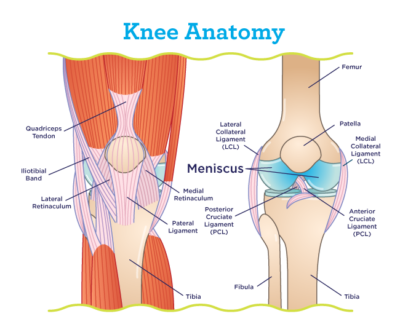
The meniscus is a C-shaped piece of cartilage that acts as a shock absorber between the thighbone (femur) and shinbone (tibia). Tears can occur in athletes during sports, particularly contact sports, or in anyone performing twisting, pivoting or quick start-stop movements.
Meniscus tears can also result from degenerative changes over time, especially in older adults. It’s not uncommon for a meniscus tear to occur alongside other knee injuries, such as an ACL tear.
What is a Meniscus?
Within the knee, there are two wedge-shaped cushions of tissue called the menisci. These act as shock absorbers for the knee, help distribute weight evenly across the joint and provide stability.
Whare are the Types of Meniscus Tears?
Meniscus tears are classified by their shape, size and location.
There are six kinds of meniscus tears, which may occur simultaneously.
The outer third of the meniscus (red zone) has a good blood supply and therefore better repair and healing potential, but the majority still do not heal on their own without surgical repair. The inner two-thirds (white zone) lacks significant blood flow, and tears here often require partial removal or other surgical intervention.
What Causes a Meniscus Tear?
Acute meniscus tears are often sports-related, caused by twisting, pivoting or sudden direction changes. There are also degenerative tears, which develop over time due to worn cartilage; even minor twisting or standing up can cause a tear in older adults. And meniscus tears frequently occur with ACL or other ligament injuries.
What are Signs and Symptoms of Meniscus Tears?
You may have a meniscus tear if you experience:
- Knee pain
- Stiffness and swelling
- “Catching” or locking of the knee
- Feeling that your knee is giving out
- Limited range of motion
Some people may notice a popping sensation when the tear occurs, and while walking may still be possible initially, swelling and stiffness often develop over the next few days.
Meniscus Tear Treatment
Nonsurgical Treatment
Many meniscus tears can be managed without surgery, especially small or degenerative tears, by following these guidelines or procedures:
- RICE Protocol
- Rest: Avoid activities that worsen symptoms
- Ice: Apply cold packs for 15–20 minutes, several times per day
- Compression: Use an elastic bandage to reduce swelling
- Elevation: Keep your leg elevated above heart level to minimize swelling
- Nonsteroidal anti-inflammatory drugs (NSAIDs) can reduce pain and swelling
- Physical therapy
- Corticosteroid injections to reduce inflammation in some cases
- Platelet-rich plasma (PRP) injections
Meniscus Tear Surgery
Surgery is often needed if symptoms persist despite conservative treatment or if the tear is in a non-healing area of the meniscus.
Procedures include:
- Partial meniscectomy: Trims damaged tissue; shorter recovery (3–6 weeks)
- Meniscus repair: Sutures torn pieces together; longer recovery (3–6 months)
- Meniscus transplant: Replaces damaged meniscus with donor tissue, often for younger, active patients without significant cartilage loss
What Does Recovery Look Like for a Torn Meniscus?
Rehabilitation through physical therapy is critical for restoring knee strength, mobility and function.
With proper diagnosis, treatment and rehabilitation, most patients return to their pre-injury activity level and experience long-term knee stability.
Treat Meniscus Tears at OrthoNebraska
Need help healing from a torn meniscus in the Omaha area? At OrthoNebraska, we want to make sure that our patients feel understood, safe and confident to take on an appropriate treatment plan. With proper management, we can help you reduce pain levels and improve quality of life.
Meniscus Tear Specialists
-
 Ryan M. Arnold, MDKnee, Sports Medicine
 -
 Mark E. Goebel, MDHip, Joint Replacement, Knee, Shoulder, Sports Medicine
 -
 Steven X. Goebel, MDJoint Replacement, Knee, Shoulder, Sports Medicine
 -
 Jace J. Heiden, MDSports Medicine, Knee, Shoulder, Hip Arthroscopy
 -
 Scott B. Reynolds, MDSports Medicine, Knee, Shoulder, Elbow